The Compliance Dashboard Your Executive Team Should See Every Month
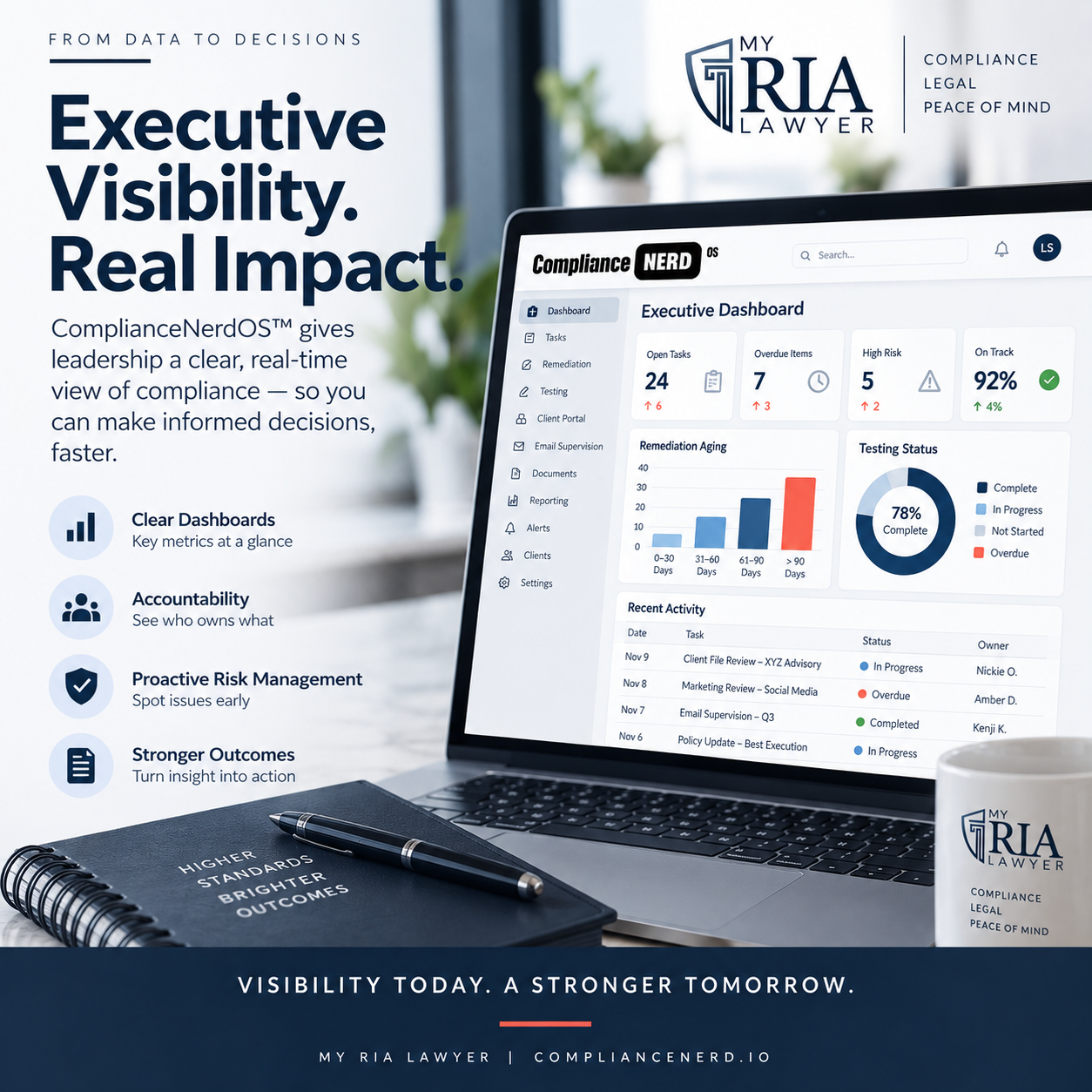
A compliance program can be busy and still be hard to manage.
At larger RIAs, the problem is rarely a lack of activity. The problem is visibility. Testing is happening. Emails are being reviewed. Marketing is being approved. Exceptions are being discussed. Annual-review work is somewhere in progress. But if the CEO, COO or CCO cannot quickly answer what is open, what is aging, what is high risk and what has actually been closed with evidence, the firm does not have an executive view of compliance—it has a collection of activities.
The dashboard should answer management questions, not merely list tasks.
A useful compliance dashboard is not a longer to-do list. Leadership should be able to see, at a minimum: testing completed versus planned; open findings by severity; remediation aging; overdue client or adviser requests; exceptions requiring escalation; marketing-review volume and recurring issues; personal-trading or attestations that remain incomplete; regulatory filings or disclosures approaching deadlines; and material dependencies on one individual, vendor or system.
Aging matters because unresolved findings compound.
An issue that has been open for 90 days is not the same management problem it was on day three. Aging can indicate unclear ownership, weak escalation, operational resistance or a finding that was “answered” without being remediated. Mature programs make age visible so leadership can distinguish ordinary workflow from structural delay.
Closure should require evidence.
A finding is not closed because someone replied to the email. The firm should be able to show what changed, who approved the change, when the change occurred and what evidence demonstrates that the control is now operating. That may be a revised procedure, a corrected disclosure, a completed refund, a system setting, a training record, a testing result or another objective record. Without evidence, closure is often only a status label.
Executives need trend visibility.
One month of data can show workload. Several months can show whether the program is getting healthier. Are the same marketing issues recurring? Are the same offices generating exceptions? Is remediation time increasing? Are testing completion rates slipping as the firm grows? Trend lines turn compliance from an episodic legal function into an operating system that management can actually supervise.
The goal is not more reporting. It is better control.
The strongest compliance teams do not create dashboards because regulators require a particular chart. They create them because complex firms need a consistent way to see risk, assign ownership, escalate problems and verify closure before an exam, acquisition, personnel change or client issue creates urgency for them.
A practical test
If your executive team asked today for the five highest-risk open compliance items, the owner of each item, how long each has been open, the evidence required for closure and what changed in the last 30 days—could you produce that answer quickly and consistently? If not, the gap is probably not effort. It is infrastructure.
How My RIA Lawyer approaches the problem
My RIA Lawyer combines attorney-led compliance support with operational testing, remediation workflows and executive reporting designed for complex RIAs. The objective is straightforward: make the compliance program easier to supervise, easier to evidence and more durable as the business grows.
Talk with My RIA Lawyer about building a compliance program that gives leadership usable visibility—not just more tasks.
Author Bio

Leila Shaver is the Founder of My RIA Lawyer, a law firm that provides compliance and legal consulting for financial institutions. With extensive experience as a securities attorney and compliance expert, she has served as Chief Compliance Officer and General Counsel to RIAs, BDs, and TAMPs with billions in assets under management.
Leila understands the challenges RIAs face and is committed to helping RIAs streamline their processes, mitigate risks, and ensure compliance with regulatory requirements. She received her Juris Doctor from Atlanta’s John Marshall Law School and is a West Georgia Young Lawyers’ Association member. Leila has received numerous accolades for her work, including the Carroll County Bar Association’s Outstanding Young Lawyer Award in 2017.